2019年10月5日 星期六

What happens in your brain when you taste food

The brain science of taste. Read online.
TED
This week on TED.com
October 5, 2019

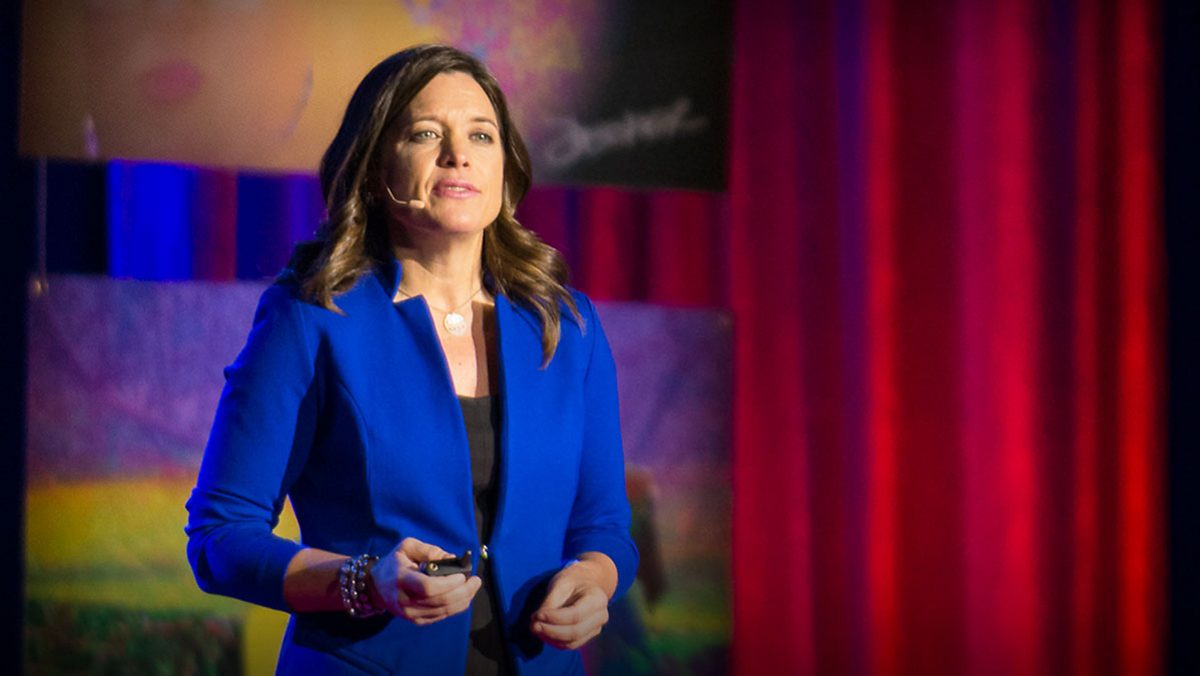
What happens in your brain when you taste food

13:43 minutes · Filmed Sep 2019 · Posted Oct 2019 · TED@DuPont

With fascinating research and hilarious anecdotes, neuroscientist Camilla Arndal Andersen takes us into the lab where she studies people's sense of taste via brain scans. She reveals surprising insights about the way our brains subconsciously experience food -- and shows how this data could help us eat healthier without sacrificing taste.

Playlist of the week

What's the future of food?

Scientists and entrepreneurs have been cooking up innovative ways to put food on our tables. What are they serving up next? Watch »

Total run time 1:08:15

This week's new TED Talks

How we experience time and memory through art
Artist Sarah Sze takes us on a kaleidoscopic journey through her work: immersive installations as tall as buildings, splashed across walls, orbiting through galleries -- blurring the lines between time, memory and space. Explore how we give meaning to objects in this beautiful tour of Sze's experiential, multimedia art.

Why language is humanity's greatest invention
Civilization rests upon the existence of language, says language creator David Peterson. In a talk that's equal parts passionate and hilarious, he shows how studying, preserving and inventing new languages helps us understand our collective humanity -- and gives a quick lesson on High Valyrian, one of two languages he created for "Game of Thrones" (along with Dothraki).

What the US health care system assumes about you
The US health care system assumes many things about patients: that they can take off from work in the middle of the day, speak English, have a working telephone and a steady supply of food. Because of that, it's failing many of those who are most in need, says Mitchell Katz, CEO of the largest public health care system in the US. In this eye-opening talk, he shares stories of the challenges low-income patients face -- and how we can build a better system for all.

How community-led conservation can save wildlife
Conservationist and TED Fellow Moreangels Mbizah studied the famous Cecil the lion until he was shot by a trophy hunter in 2015. She wonders how things could've gone differently, asking: "What if the community that lived next to Cecil was involved in protecting him?" In a quick talk, Mbizah shares the state of conservation in her home of Zimbabwe -- and why she thinks that communities living with wildlife are the ones best positioned to help them.

Innovation is the antidote to corruption
Traditional thinking on corruption goes like this: if you put good laws in place and enforce them well, then economic development increases and corruption falls. In reality, we have the equation backwards, says innovation researcher Efosa Ojomo. In this compelling talk, he offers new thinking on how we could potentially eliminate corruption worldwide by focusing on one thing: scarcity.

Why you should shop at your local farmers market
The average farmer in America makes less than 15 cents of every dollar on a product that you purchase at a store. They feed our communities, but farmers often cannot afford the very foods they grow. In this actionable talk, social entrepreneur Mohammad Modarres shows how to put your purchasing power into action to save local agriculture from collapse and transform the food industry from the bottom up.

READ THE LATEST ON IDEAS.TED.COM

Crave more stillness in your life? You can find it in beauty.

TED Recommends


Feed your mind with ideas from the world’s best thinkers, doers and creators.
 

2019年10月2日 星期三

What idea will you discover next, Chia-Ching?

Check out your latest talk recommendation from TED Recommends.
TED logo
Hi Chia-Ching,
Here's an idea we think you'll appreciate. Where good ideas come from by Steven Johnson was recommended by Elizabeth Gu:
This is an awesome talk! Watching a talk about where good ideas come from always seems to spark good ideas in me — why should I be surprised? Steven's thoughtful examples and perspective on "eureka moments" are inspiring.
Elizabeth Gu, TED community member
This idea has been viewed 4,867,114 times, and translated into 32 languages.
It was recommended to you because of your interest in Science, Technology, Collaboration, and Innovation. (Pro tip: you can adjust your interests any time you like, or see all your past recommendations in your dashboard.)
What did you think?

Parting thought
“A lot of people are confused by the idea of no hard sticker price [on my music]. They see it as an unpredictable risk, but … I see it as trust.”
Amanda Palmer, Musician, blogger, from Amanda Palmer: The art of asking
Questions? Hit reply and we'll be in touch.

Copyright © 2019 TED Conferences LLC. All rights reserved.
Need more info? Email us: contact@ted.com
Our mailing address is:
TED Conferences LLC
330 Hudson Street, New York, NY 10013

2019年9月28日 星期六

How couples can sustain a strong sexual connection

Here's what makes for a great sexual connection. Read online.
TED
This week on TED.com
September 28, 2019

How couples can sustain a strong sexual connection for a lifetime

09:57 minutes · Filmed May 2019 · Posted Sep 2019 · TEDxFergusonLibrary

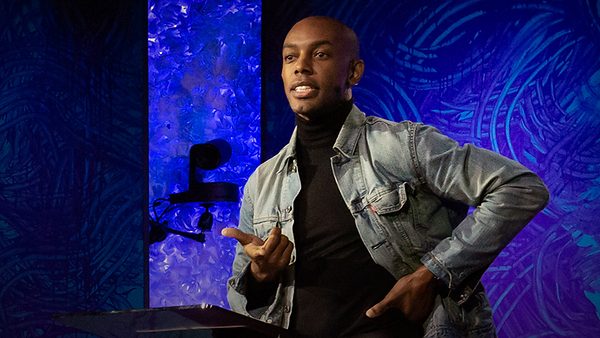
As a sex educator, Emily Nagoski is often asked: How do couples sustain a strong sexual connection over the long term? In this funny, insightful talk, she shares her answer -- drawing on (somewhat surprising) research to reveal why some couples stop having sex while others keep up a connection for a lifetime.

Playlist of the week

What we don't talk about (when we talk about sex)

Seriously, let's talk about sex: eight insightful talks to spark the conversations we need to have in (and out of) the bedroom. Watch »

Total run time 1:54:55

This week's new TED Talks

A wall won't solve America's border problems
"Building a 30-foot-high concrete structure from sea to shining sea is the most expensive and least effective way to do border security," says Congressman Will Hurd, a Republican from Texas whose district encompasses two times zones and shares an 820-mile border with Mexico. He discusses the US government's border policy and its controversial detention and child separation practices -- and lays out steps toward a better future at the border. (Recorded at the TED World Theater in New York on September 10, 2019)

Creativity builds nations
In a hopeful talk followed by an empowering performance, musician and TED Fellow Muthoni Drummer Queen shares how industries like music, film and fashion provide a platform for Africans to broadcast their rich and diverse talents -- and explains how the shared experience of creativity can replace attitudes of exclusionism and othering with acceptance and self-love.

A bold plan to empower 1.6 million out-of-school girls in India
"Girls' education is the closest thing we have to a silver bullet to help solve some of the world's most difficult problems," says social entrepreneur Safeena Husain. In a visionary talk, she shares her plan to enroll a staggering 1.6 million girls in school over the next five years -- combining advanced analytics with door-to-door community engagement to create new educational pathways for girls in India.

Can seaweed help curb global warming?
It's time for planetary-scale interventions to combat climate change -- and environmentalist Tim Flannery thinks seaweed can help. In a bold talk, he shares the epic carbon-capturing potential of seaweed, explaining how oceangoing seaweed farms created on a massive scale could trap all the carbon we emit into the atmosphere. Learn more about this potentially planet-saving solution -- and the work that's still needed to get there.

How we're building the world's largest family tree
Computational geneticist Yaniv Erlich helped build the world's largest family tree -- comprising 13 million people and going back more than 500 years. He shares fascinating patterns that emerged from the work -- about our love lives, our health, even decades-old criminal cases -- and shows how crowdsourced genealogy databases can shed light not only on the past but also on the future.

How one tree grows 40 different kinds of fruit
Artist Sam Van Aken shares the breathtaking work behind the "Tree of 40 Fruit," an ongoing series of hybridized fruit trees that grow 40 different varieties of peaches, plums, apricots, nectarines and cherries -- all on the same tree. What began as an art project to showcase beautiful, multi-hued blossoms has become a living archive of rare heirloom specimens and their histories, a hands-on (and delicious!) way to teach people about cultivation and a vivid symbol of the need for biodiversity to ensure food security.

READ THE LATEST ON IDEAS.TED.COM

Want to get more from Wikipedia? Try reading about a subject in a different language.

How to make your arguments stronger. Hint: longer is not the answer.

How does impeachment work? A quick TED explainer, if you're confused like the rest of us.

TED Recommends


Find a new way to see the world around you. Discover bold ideas that inspire and challenge you!
 

2019年9月25日 星期三

Chia-Ching, here’s why you should watch this talk...

Check out your latest talk recommendation from TED Recommends.
TED logo
Hi Chia-Ching,
Here's an idea we think you'll appreciate. Why being respectful to your coworkers is good for business by Christine Porath was recommended by Alf de Hombre:
"Communication" or rather the unconscious misuse of it has major consequences. This is such an important topic as it relates to us all at virtually every moment of the day. This should be included as education in every workplace or school for all ages. Thank you Christine Porath for distilling this – it is revolutionary and totally relevant for a sane future for humanity.
Alf de Hombre, Principal and Creative Director, AccessCreativeAdvertisingServices
This idea has been viewed 2,362,144 times, and translated into 20 languages.
It was recommended to you because of your interest in Science, Business, and Personal growth. (Pro tip: you can adjust your interests any time you like, or see all your past recommendations in your dashboard.)
What did you think?
An idea from TED by Embrace your raw, strange magic
We'd love to know what you thought about Embrace your raw, strange magic.

Parting thought
“Fear is … a kind of unintentional storytelling that we are all born knowing how to do.”
Karen Thompson Walker, Novelist, from Karen Thompson Walker: What fear can teach us
Questions? Hit reply and we'll be in touch.

Copyright © 2019 TED Conferences LLC. All rights reserved.
Need more info? Email us: contact@ted.com
Our mailing address is:
TED Conferences LLC
330 Hudson Street, New York, NY 10013