2018年10月6日 星期六

Why being nice to your coworkers is good for business

Civility makes good leaders. Open in browser
TED
This week on TED.com
October 6, 2018

Christine Porath: Why being nice to your coworkers is good for business

15:24 minutes · Filmed Jan 2018 · Posted Oct 2018 · TEDxUniversityofNevada

Looking to get ahead in your career? Start by being nice to your coworkers, says leadership researcher Christine Porath. In this science-backed talk, she shares surprising insights about the costs of rudeness and shows how little acts of respect can boost your professional success -- and your company's bottom line.

Playlist of the week

8 ways to fuel innovation

Feel like you're running low on fresh ideas? Get creative with these thought-provoking TED Talks to inspire new and experimental thinking. Watch »

8 TED Talks to browse • Or watch 'em all! Total run time 1:53:39

This week's new TED Talks

Spider venom can stop your heart within minutes, cause unimaginable pain -- and potentially save your life, says zoologist Michel Dugon. As a tarantula crawls up and down his arm, Dugon explains the medical properties of this potent toxin and how it might be used to produce the next generation of antibiotics. Watch »

Is it better to be lucky or good? Should we trust our gut feelings or rely on probabilities and careful analysis when making important decisions? In this quick talk, professional poker player Liv Boeree shares three strategies she's learned from the game and how we can apply them to real life. Watch »

Inspired by the events of Hurricane Katrina in 2005, choreographer Camille A. Brown made "New Second Line," a celebration of the culture of New Orleans and the perseverance of Black people in the midst of devastation. It's a gorgeous, swirling, powerful dance that fills the red circle with energy and music. Suggestion: Watch on a big screen. Watch »

Many African countries are poor for a simple reason, says entrepreneur Magatte Wade: governments have created far too many obstacles to starting and running a business. In this passionate talk, Wade breaks down the challenges of doing business on the continent and offers some ideas to fix it -- while calling out leaders to do their part, too. Watch »

Read more on ideas.ted.com

Food: Are you ready to eat lab-grown meat?
Cultured meat could be coming to your plate soon. How is it made? And will it help, or hurt, the planet? Here’s what we know so far. Read more »

Culture: Why the US needs to pass the Equal Rights Amendment — finally 
In the US, women aren't yet fully equal under the law. Read more »

Science: 3 ways your memory can stay sharp as you get older
Yes, overall memory declines as we age ... but that’s far from the whole story. Read more »

Quote of the Week

“

What do people want most from their leaders? We took data from over 20,000 employees around the world, and we found the answer was simple: respect."

Christine Porath
Why being nice to your coworkers is good for business

TED Radio hour: What Makes Us ... Us

For thousands of years, we've searched to answer the question: Who are we? Today, science has brought us closer than ever to the answer. This hour, TED speakers share ideas on what makes us ... us. Listen on NPR, Apple Podcasts or the TED Android app.


2018年9月29日 星期六

The simple genius of a good graphic

How to make data come alive. Open in browser
TED
This week on TED.com
September 29, 2018

Tommy McCall: The simple genius of a good graphic

05:57 minutes · Filmed Apr 2018 · Posted Sep 2018 · TED2018

In a talk that's part history lesson, part love letter to graphics, information designer Tommy McCall traces the centuries-long evolution of charts and diagrams -- and shows how complex data can be sculpted into beautiful shapes. "Graphics that help us think faster, or see a book's worth of information on a single page, are the key to unlocking new discoveries," McCall says.

Playlist of the week

What is deep time?

Meander through Earth's lengthy timeline with these talks that go way, way back to the beginning of everything. Watch »

8 TED Talks to browse in your own sweet time

This week's new TED Talks

In 2009, 11,341 untested rape kits -- some dating back to the 1980s -- were found in an abandoned warehouse once used by the Detroit police. When this scandal was uncovered, prosecutor Kym Worthy set a plan into action to get justice for thousands of victims -- and put predators behind bars. Watch »

Does your city rock? Speaking onstage in the legendary music city of Memphis, Tennessee, Elizabeth Cawein shares how a thriving music scene can make a city healthier and happier. Listen for ideas about promoting your local music scene -- and showing off your city's talent to the world. Watch »

We all want to be safe, and our safety is intertwined, says Tracie Keesee, a 25-year police officer and the cofounder of the Center for Policing Equity. She shares the theory of "co-production" -- the idea that everyone in a community has a role in building safety and security. "We must move forward together," Keesee says. "There's no more us versus them." Watch »

Young photographer Isadora Kosofsky is a chronicler of love, loss and loneliness. In this searching talk, she shares photos from her four years documenting the lives of three senior citizens who form a love triangle. Her tender portraits reveal what seniors can teach us about our universal search for love and belonging. Watch »

Read more on ideas.ted.com

Our planet: Surprisingly fascinating: methane
A rewarding read about this lighter-than-air gas

Useful advice: After a disaster, don’t send food or clothing; send money 
Tips and truths from a disaster relief expert

We humans: Facing a tough decision? How to see past your blind spots
Borrow these 3 tactics from psychology, business, the military


Quote of the Week

“

Our visual cortex was built to decode complex information and is a master at pattern recognition. Graphics that help us think faster or see a book's worth of information on a single page are the key to unlocking new discoveries."

Tommy McCall
The simple genius of a good graphic

TED Radio hour: humane cities

Cities are symbols of hope and opportunity. But overcrowding and gentrification can hurt our neighborhoods. This hour, TED speakers explore how we can build more humane, welcoming cities. Listen on NPR, Apple Podcasts or the TED Android app.


2018年9月22日 星期六

Your fingerprints reveal more than you think

The latest in forensic science. Open in browser
TED
This week on TED.com
September 22, 2018

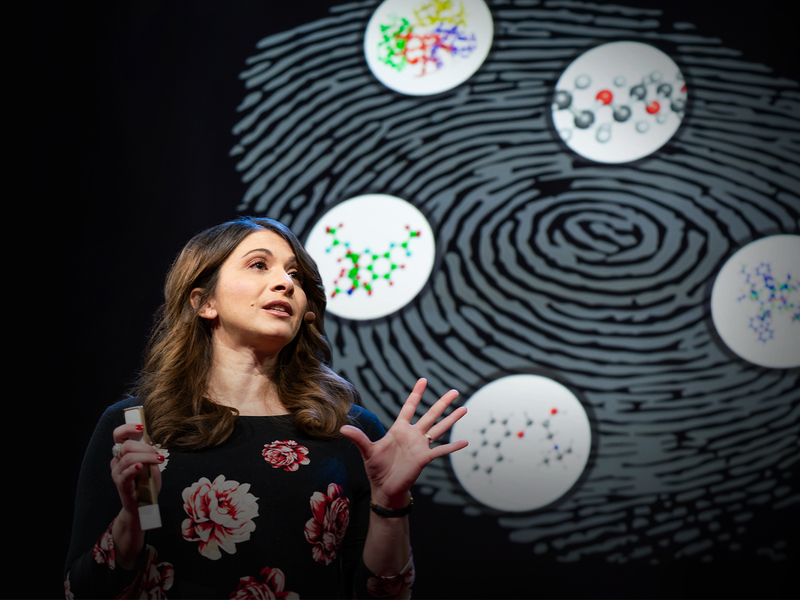
Simona Francese: Your fingerprints reveal more than you think

10:05 minutes · Filmed Apr 2018 · Posted Sep 2018 · TED2018

Our fingerprints are what make us unique -- but they're also home to a world of information hidden in molecules that reveal our actions, lifestyles and routines. In this riveting talk, chemist Simona Francese shows how she studies these microscopic traces using mass spectrometry, a technology that analyzes fingerprints in previously impossible detail, and demonstrates how this cutting-edge forensic science can help police catch criminals.

Playlist of the week

Who's watching us? (10 talks)

In the age of smart tech, privacy is a definite concern. Here's the download on who has your information and what they're doing with it. Watch »

Total run time 2:10:10

--

This week's new TED Talks

When the pressure is on, why do we sometimes fail to live up to our potential? Cognitive scientist Sian Leah Beilock reveals what happens in your brain and body when you choke in stressful situations -- from a soccer game to a math test -- and shares psychological tools that can help you perform at your best when it matters most. Watch »

What if we could help our bodies heal faster and without scars, like Wolverine in X-Men? TED Fellow Kaitlyn Sadtler is working to make this dream a reality by developing new biomaterials that could change how our immune system responds to injuries. In this quick talk, she shows the different ways these products could help the body regenerate. Watch »

After a horrific accident put her in the tabloid headlines, Kate Stone found a way to take back control of her narrative -- and help prevent others from losing their privacy, too. Learn how she reclaimed her story in this personal talk infused with humor and courage. Watch »

Nobody likes going to the hospital. What if we could get lifesaving care in our own homes? Health care futurist Niels van Namen shows how advances in technology are making home care a cheaper and safer alternative to (some) hospital stays. Watch »

Archaeologist and curator Chip Colwell collects artifacts for his museum, but he also returns them to where they came from. In a thought-provoking talk, he discusses how some museums are confronting a legacy of stealing spiritual objects and pillaging ancient graves -- and working with communities to return their cultural treasures. Watch »

As a young scientist, Catherine Mohr was on her dream scuba trip -- when she put her hand right down on a spiny sea urchin. While a school of sharks circled above. What happened next? More than you can possibly imagine. Settle in for this fabulous story with a dash of science. Watch »

Read more on ideas.ted.com

Tech: This online forum for teens has zero bullies. How do they do it?
Meet a young technologist who turns civility into a game

We humans: Headed to a protest? Here’s what to know before you go
Use your voice to change the world -- and stay safe

Career: The 5 types of mentors you need in your life
How to assemble your personal dream team to help you find your path

Quote of the Week

“

It turns out that math anxiety is contagious. When adults are anxious about their own math ability, it rubs off on their kids and it affects whether they choke or thrive. But just as we can put limits on others, we can take them off. My research team and I have shown that when we help parents do fun math activities with their kids -- like bedtime math, fun story problems to do with your kids -- not only do children's attitudes about math improve, but their math performance across the school year improves as well."

Sian Leah Beilock
Why we choke under pressure -- and how to avoid it

TED Radio hour: getting better

We expect a lot of our doctors, but they don't always have the best tools to treat us. This episode, TED speakers explore new ways to think about disease, diagnosis and the delicate art of healing. Listen on NPR, Apple Podcasts or the TED Android app.


2018年9月15日 星期六

Struggling to make a decision? 3 ways to make better decisions -- by thinking like a computer

How to think in algorithms. Open in browser
TED
This week on TED.com
September 15, 2018

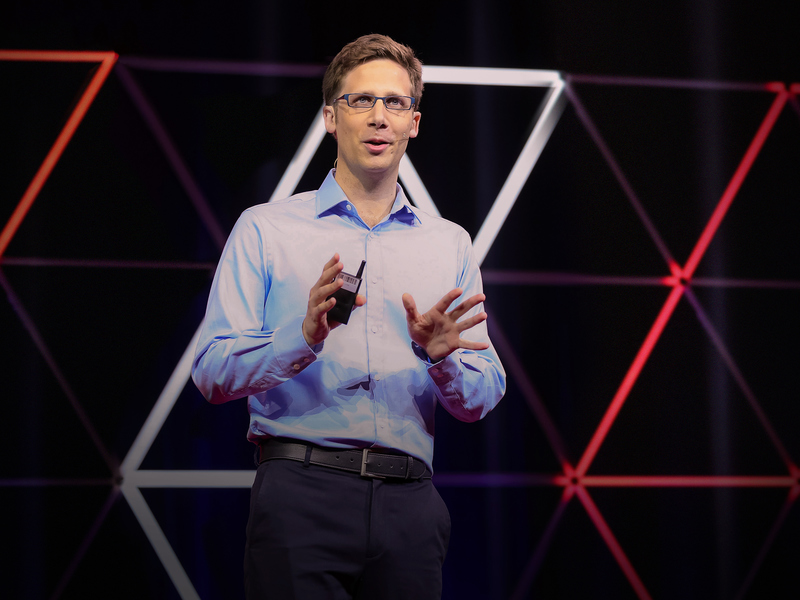
Tom Griffiths: 3 ways to make better decisions -- by thinking like a computer

11:47 minutes · Filmed Jun 2017 · Posted Sep 2018 · TEDxSydney

If you ever struggle to make decisions, here's a talk for you. Cognitive scientist Tom Griffiths shows how we can apply the logic of computers to untangle tricky human problems, sharing three practical strategies for making better decisions -- on everything from finding a home to choosing which restaurant to go to tonight.

Playlist of the week

The value of skepticism (10 talks)

These TED Talks push us to question more -- our doctors, our governments and even our own eyes. Watch »

Total run time 2:27:56

This week's new TED Talks

Of all the problems facing humanity, which should we focus on solving first? In a compelling talk about how to make the world better, moral philosopher Will MacAskill provides a framework for answering this question based on the philosophy of "effective altruism" -- and shares ideas for taking on three pressing global issues. Watch »

Did the world's response to 9/11 make us any safer? In an eye-opening talk, TED Fellow and conflict researcher Benedetta Berti suggests that building a safer world has a lot less to do with crushing enemies on the battlefield and a lot more to do with protecting civilians -- no matter where they're from or where they live. Watch »

For nearly half a century, scientists have been trying to create a process for transplanting animal organs into humans. But the risks, specifically of transmitting the PERV virus from pigs to humans, have always been too great, stalling research -- until now. In a mind-blowing talk, geneticist Luhan Yang explains a breakthrough: using CRISPR, a technique for editing genes, she and her colleagues have created pigs that don't carry the virus. Watch »

In 2011, eye surgeon Andrew Bastawrous developed a breakthrough app that brings eye care to remote communities, preventing blindness and disease. But along the way, he noticed a problem: strict funding regulations meant that he could only treat people with specific diseases, leaving many others without help. In this passionate talk, Bastawrous calls for a new health care funding model that's flexible and ambitious -- to deliver better health to everyone. Watch »

Read more on ideas.ted.com

Living: Got too much stuff? 7 TED-tested tips to de-clutter
Wise advice from speakers on how to pare down and love your space

Creativity: Anger can be fire for creativity -- so let it burn
A passionate case to channel your rage into power, art, music, action

Gallery: What's it like to live next to a volcano?
Meet people from around the world who live next to a massive, unpredictable force of nature

Quote of the Week

“

You can't control outcomes, just processes. And as long as you've used the best process, you've done the best that you can."

Tom Griffiths
3 ways to make better decisions — by thinking like a computer

TED Radio hour: Decisions Decisions

Whether you're choosing spaghetti sauce or a life partner, making decisions can be paralyzing. This hour, TED speakers explore how we make the choices we make, and how we learn to live with them. Listen on NPR, Apple Podcasts or the TED Android app.