2017年2月4日 星期六

How to get better at the things you care about

TED
This week on TED.com
February 4, 2017

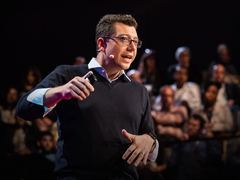
Eduardo Briceño: How to get better at the things you care about

11:22 minutes · Filmed Nov 2016 · Posted Feb 2017 · TEDxManhattanBeach

Work, parenting, creative hobbies: We all want to continuously improve, to get better at the things we care about doing. In this talk, educator Eduardo Briceño reveals a simple way to structure your time so you can always keep learning.

Playlist of the week

TED’s how-to guide to everyday life

A treasure trove of how-tos (from tying your shoes to finding work you love) to bookmark, download and return to again and again. Watch »

15 TED Talks • Total run time 3:06:20

This week's new TED Talks

Think you're good at guessing stats? Guess again. Whether we consider ourselves math people or not, our ability to understand and work with numbers is surprisingly limited, says data visualization expert Alan Smith. In this delightful talk, he explores the mismatch between what we know and what we think we know. Watch »

Nagin Cox is a first-generation Martian. As a spacecraft engineer at NASA's Jet Propulsion Laboratory, Cox works on the team that manages the United States' rovers on Mars. But working a 9-to-5 on another planet -- whose day is 40 minutes longer than Earth's -- has particular, often comical challenges. Watch »

Sarah Parcak uses satellites orbiting hundreds of miles above Earth to uncover hidden ancient treasures buried beneath our feet. There's a lot to discover; in the Egyptian Delta alone, she estimates we've excavated less than a thousandth of one percent of what's out there. In this talk, she invites us all to help out -- by joining a new online community called GlobalXplorer that lets ordinary people discover unknown sites by poring over satellite images. Log in and help protect our shared human inheritance. Watch »

Sue Klebold is the mother of Dylan Klebold, one of the two shooters who committed the Columbine High School massacre, murdering 12 students and a teacher. She's spent years excavating every detail of her family life, trying to understand what she could have done to prevent her son's violence. In this difficult, jarring talk, Klebold explores the intersection between mental health and violence, advocating for parents and professionals to continue to examine the link between suicidal and homicidal thinking. Watch »

Read more on ideas.ted.com

Brain: Football helmets don’t protect against concussion — and we’re not sure what does »
Inside the hunt to understand what a concussion is, and how to prevent it

Our world: 4 major archeological finds from just last year »
We keep finding new, amazing things about our human history. Did you know these 4?

Gallery: What happens when you mix math, coral and crochet? »
A gorgeous gallery of crocheted sea creatures that explores their unique structure

Quote of the Week

Statistics are at their most powerful when they surprise us."

Alan Smith
Why you should love statistics

Sincerely, X: A new audio series from TED and Audible

Explore stories so powerful they can only be shared anonymously ... in this brand-new audio series from TED and Audible. Get the Audible app »


2017年1月29日 星期日

Where is cybercrime really coming from?

Catch up on TED Talks from this week: January 29, 2017
TED

Caleb Barlow: Where is cybercrime really coming from?

14:27 minutes · Filmed Nov 2016 · Posted Jan 2017 · TED@IBM

Cybercrime netted a whopping $450 billion in profits last year, with 2 billion records lost or stolen worldwide. Security expert Caleb Barlow calls out the insufficiency of our current strategies to protect our data. His solution? We need to respond to cybercrime with the same collective effort as we apply to a health care crisis, sharing timely information on who is infected and how the disease is spreading. If we're not sharing, he says, then we're part of the problem.

Playlist of the week

Unsolved mysteries

In these talks, follow the twists and turns of a good old-fashioned mystery -- of all kinds. Watch »

8 TED Talks • Total run time 2:05:01

This week's new TED Talks

A skyscraper that channels the breeze ... a building that creates community around a hearth ... Jeanne Gang uses architecture to build relationships. In this engaging tour of her work, Gang invites us into buildings large and small, from a surprising local community center to a landmark Chicago skyscraper. "Through architecture, we can do much more than create buildings," she says. "We can help steady this planet we all share." Watch »

Creating genetically modified people is no longer a science fiction fantasy; it's a likely future scenario. Biologist Paul Knoepfler estimates that within fifteen years, scientists could use the gene editing technology CRISPR to make certain "upgrades" to human embryos -- from altering physical appearances to eliminating the risk of auto-immune diseases. In this thought-provoking talk, Knoepfler readies us for the coming designer baby revolution and its very personal, and unforeseeable, consequences. Watch »

As the child of an Afghan mother and Pakistani father raised in Norway, Deeyah Khan knows what it's like to be a young person stuck between your community and your country. In this powerful, emotional talk, the filmmaker unearths the rejection and isolation felt by many Muslim kids growing up in the West -- and the deadly consequences of not embracing our youth before extremist groups do. Watch »

Deepika Kurup has been determined to solve the global water crisis since she was 14 years old, after she saw kids outside her grandparents' house in India drinking water that looked too dirty even to touch. Her research began in her family kitchen -- and eventually led to a major science prize. Hear how this teenage scientist developed a cost-effective, eco-friendly way to purify water. Watch »

Read more on ideas.ted.com

Future: In our winner-take-all world, how can we lose well?
A thoughtful essay on something we all do sometimes ...

Science: For healthier buildings, just add ... bacteria?
Why this scientist is studying the microbiome inside your home, school and workplace

Brain: What happens inside your brain when you hear a great story?
Neuroscientist Uri Hasson shares an interesting experiment from his lab 

Quote of the Week

This Syrian young man survived one of these boats that capsized — most of the people drowned — and he told us, "Syrians are just looking for a quiet place where nobody hurts you, where nobody humiliates you, and where nobody kills you." Well, I think that should be the minimum. How about a place of healing, of learning, and even opportunity?

Melissa Fleming
Let's help refugees thrive
 

2017年1月22日 星期日

How to talk politics so the "other side" will listen

Catch up on TED Talks from this week: January 22, 2017
TED

Robb Willer: How to have better political conversations

12:01 minutes · Filmed Sep 2016 · Posted Jan 2017 · TEDxMarin

Robb Willer is a social psychologist who studies the moral values that unite and divide us. And in this surprising talk, he shows how moral values -- too often a source of division -- can also be used to bring people together, to help people hear one another better. He shares some compelling insights on how we might bridge ideological divides, and offers intuitive advice on how to speak (and listen) better when talking politics.

Playlist of the week

When your beliefs are challenged

What do you do when your beliefs and understanding of the world have been challenged -- or even destroyed? Take a deep breath and learn from TED’s best on how to approach these moments with grace and fortitude. Watch »

5 TED Talks • Total run time 1:00:40

More TED Talks

Five years ago, Jennifer Brea became ill with myalgic encephalomyelitis, commonly known as chronic fatigue syndrome, a debilitating illness that severely impairs normal activities and on bad days makes even the rustling of bed sheets unbearable. In this poignant talk, Brea describes the obstacles she's encountered in seeking treatment, and her mission to document through film the lives of patients like her that medicine struggles to treat. Watch »

Emily Parsons-Lord re-creates air from distinct moments in Earth's history -- from the clean, fresh-tasting air of the Carboniferous period to the soda-water air of the Great Dying to the heavy, toxic air of the future we're creating. By turning air into art, she invites us to know the invisible world around us. Breathe in the Earth's past and future in this imaginative, trippy talk. Watch »

Enough with online hate speech: It's time to take the global crisis of online abuse seriously. In this powerful talk, Ashley Judd shares in brutal detail her ongoing experience of being targeted on social media, and calls on citizens of the internet, the tech community, law enforcement and legislators to recognize the offline harm of online harassment. (Warning: Graphic language.) Watch »

James Beacham looks for answers to the most important open questions of physics using the biggest science experiment ever mounted, CERN's Large Hadron Collider. In this fun and accessible talk about how science happens, Beacham takes us on a journey through extra-spatial dimensions in search of undiscovered fundamental particles (and an explanation for the mysteries of gravity) and details the drive to keep exploring. Watch »

Read more on ideas.ted.com

Art: Can political action make great art? Meet 12 young artists who say yes 
TED Fellows are using theater, sculpture, even graffiti to share their message

Poetry: 5 poems for the United States inauguration weekend
Explore this moment in time, with 5 poems to read, listen and watch

Education: This new curriculum helps student build life skills -- by building tiny houses 
How design-build projects can teach kids the most important skills of all

Quote of the Week

You know, it turns out that when we go to persuade somebody on a political issue, we talk like we're speaking into a mirror. We don't persuade so much as we rehearse our own reasons for why we believe. [In our experiments] we kept saying: "Empathy and respect, empathy and respect." If you can tap into that, you can connect, and you might be able to persuade somebody."

Robb Willer
How to have better political conversations

ted radio hour: the five senses

The five senses shape our experience, but we still don't fully understand them. In our latest show, TED speakers explore how our brains make sense of sensation, and how our minds manufacture "reality." Listen to TED Radio Hour on iTunes »


2017年1月14日 星期六

There's a better way to talk about love

Catch up on TED Talks from this week. January 14, 2017
TED
This week on TED.com

Mandy Len Catron: A better way to talk about love

15:17 minutes · Filmed Nov 2015 · Posted Jan 2017 · TEDxSFU

In love, we fall. We're struck, we're crushed, we swoon. We burn with passion. Love makes us crazy and makes us sick. Our hearts ache, and then they break. Talking about love in this way fundamentally shapes how we experience it, says writer Mandy Len Catron. In this talk for anyone who's ever felt crazy in love, Catron highlights a different metaphor for love that may help us find more joy -- and less suffering -- in it.

Playlist of the week

Talks for the hopeless romantic

Who doesn't love love? A collection of 8 talks for those who can't get enough of it. Watch »

8 TED Talks • Total run time 1:51:25

This week's TED Talks

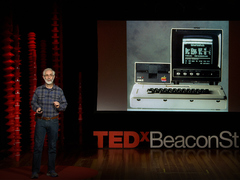
Dan Bricklin changed the world forever when he codeveloped VisiCalc, the first electronic spreadsheet and grandfather of programs you probably use every day like Microsoft Excel and Google Sheets. Join the software engineer and computing legend as he explores the tangled web of first jobs, daydreams and homework problems that led to his transformational invention. Watch »

Every year the silicon computer chip shrinks in size by half and doubles in power, enabling our devices to become more mobile and accessible. But what happens when our chips can't get any smaller? George Tulevski researches the unseen and untapped world of nanomaterials. Could they hold the secret to the next generation of computing? Watch »

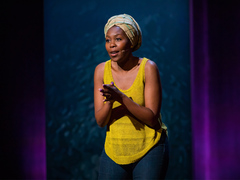
Stories are necessary to tell, but they're not as magical as they seem, says writer Sisonke Msimang. In this funny and thoughtful talk, Msimang questions our emphasis on storytelling and spotlights the decline of facts. During a critical time when listening has been confused for action, Msimang asks us to switch off our phones, step away from our screens and step out into the real world. Watch »

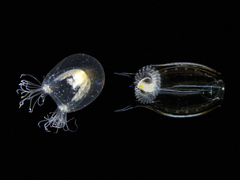
Nature is wonderfully abundant, diverse and mysterious -- but biological research today tends to focus on only seven species, including rats, chickens, fruit flies and us, says biologist Alejandro Sánchez Alvarado. In this visually captivating talk, Alvarado calls on us to interrogate the unknown and shows us the remarkable discoveries that surface when we do. Watch »

Read more on ideas.ted.com

Money: Would universal income save the world? Maybe. But why not try these three (slightly easier) options first >>
The idea of universal basic income (UBI) is so hot right now! But it might not be the only, or the best, way to create more opportunity for all

Culture: The two kinds of stories we tell about ourselves >>
And how to rewrite your narrative to live with more meaning and purpose

Quote of the Week

The history of life on this planet is a history of rule breakers. Life started on the face of this planet as single-cell organisms, swimming for millions of years in the ocean, until one of those creatures decided, 'I'm going to do things differently today; today I would like to invent something called multicellularity.' And I'm sure it wasn't a popular decision at the time -- but somehow, it managed to do it. Then, land masses began to emerge from the surface of the oceans, and another creature thought, 'Hey, that looks like a really nice piece of real estate. I'd like to move there.' 'Are you crazy? Nothing can live out of water.' But life found a way. Once on land, they may have looked up into the sky and said, 'It would be nice to go to the clouds, I'm going to fly.' 'You can't break the law of gravity, there's no way you can fly.' And yet, nature has invented -- multiple and independent times -- ways to fly."

Alejandro Sánchez Alvarado
To solve old problems, study new species

TED RADIO HOUR: networks

Networks surround and sustain us, in nature, in our bodies, in relationships, in the digital world. This week, TED speakers explore how we rely on networks -- and how we have the power to shape them. Listen to the latest TED Radio Hour on iTunes »