2018年3月21日 星期三

Subscribe to a new TED newsletter

In Case You Missed It, TED2018
For five days this April, the annual TED Conference will take a deep dive into the ideas and issues you care about -- from the latest tech and science news to the deepest truths about being human in this moment. More than 100 speakers will take the stage to give the talk of their lives.

We'll be reporting live from the conference, and you can get the inside scoop by subscribing to our free, limited-run email -- delivered daily from April 10–14, 2018. Five newsletters, packed with ideas from brilliant minds, presented to you by TED and The Great Courses.

Subscribe now, and check out a sneak preview of the speaker lineup below.
Subscribe to the "In Case You Missed It" newsletter
At TED2018, experts in science, technology, arts, activism and more will cover everything from jaw-dropping AI breakthroughs to glorious new forms of creativity to courageous and radical social change. Here's a sneak peek at just a few (view the full lineup here) ...

Gwynne Shotwell

Space leader

As president and COO of SpaceX, Gwynne Shotwell is responsible for day-to-day operations and for managing all customer and strategic relations.

Yuval Noah Harari

Historian

The author of Sapiens and Homo Deus, Yuval Noah Harari explores the destinies humans will set for ourselves, and the quests we'll undertake, in the future.

Yasmin Green

Geopolitical technologist

Yasmin Green is the director of research and development for Jigsaw, a unit within Alphabet Inc. focused on solving global security challenges through technology.

Reed Hastings

Entrepreneur, philanthropist

The co-founder and CEO of Netflix, Reed Hastings is revolutionizing the world of entertainment.

Subscribe to the "In Case You Missed It" newsletter
Copyright © 2018 TED, All rights reserved.
You're receiving the TED Talks weekly newsletter because you subscribed to it on TED.com. (Was this forwarded by a friend? You can sign up here: http://www.ted.com/newsletter )

Our mailing address is:
TED
330 Hudson Street
11th Floor
New York, NY 10013

Add us to your address book


Want to change how you receive these emails?
You can update your preferences or unsubscribe from this list.

2018年3月17日 星期六

3 myths about the future of work (and why they're not true)

Will machines replace humans? Is that even the right question? Open in browser
TED
This week on TED.com
March 17, 2018

Daniel Susskind: 3 myths about the future of work (and why they're not true)

15:47 minutes · Filmed Dec 2017 · Posted Mar 2018 · TED@Merck KGaA, Darmstadt, Germany

"Will machines replace humans?" This question is on the mind of anyone with a job to lose. Daniel Susskind confronts this question and three misconceptions we have about our automated future, suggesting we ask something else: How will we distribute wealth in a world when there will be less -- or even no -- work?

Playlist of the week

Take a day trip to the Arctic and Antarctica

These speakers braved the cold at the Earth's poles (so you don't have to) and brought back stunning images and stories. Watch »

7 TED Talks • Total run time 1:22:57

THIS Week's new TED Talks

Sometimes, a single decision can change the course of history. Join journalist and author Isabel Wilkerson as she tells the story of the Great Migration, the outpouring of six million African Americans from the Jim Crow South. It happened one individual decision at a time, in a mass movement that reshaped the America we know today. Watch »

The arts bring meaning to our lives and spirit to our culture -- so why do we expect artists to struggle to make a living? Hadi Eldebek is working to help artists express their value, with an online platform that matches artists with grants and funding -- so they can focus on their craft instead of their side hustle. Watch »

Throughout his colorful career, Iké Udé has found creative ways to create striking, beautiful images of African excellence. In this tour of his work, he shares evocative portraits that blend clothing, props and poses from many cultures at once into sharp takes on the varied, complex beauty of Africa. Watch »

Deanna Van Buren asks a big question: How do we heal society after a crime has occurred? As an architect, Van Buren works to create spaces for justice, dialogue and healing -- plus job training and social services to help keep people from committing crimes in the first place. "Imagine a world without prisons," Van Buren says, "and all the things we could build instead." Watch »

According to the US Department of Education, more than 85 percent of black fourth-grade boys aren't proficient in reading. What kind of reading experiences should we be creating to ensure that all children read well? In a talk that might make you rethink how we teach, Alvin Irby explains the reading challenges that many black children face -- and inspires us to help all children identify as readers. Watch »

We're all against hate, right? We agree it's a problem -- their problem, not our problem, that is. But as Sally Kohn discovered, we all hate -- some of us in subtle ways, others in obvious ones. As she confronts a hard story from her own life, she shares ideas on how we can recognize, challenge and heal from hatred in our institutions and in ourselves. Watch »

Read more on ideas.ted.com

Education: Too many teachers in the US struggle to earn a living. Three ideas to change that >>
A veteran educator from Oklahoma shares tough truths and a bold vision 

Tech: This small country is building a tech-enabled e-government >>
How (and why) tiny Estonia is creating an information society

Working life: Tapping into the power of the humble narcissist >>
Is it better to be humble or to be a star? The answer: both


Do you have 5 minutes to help us make TED Talks better? 
TED is building a new rating system to improve the quality of talks we share with you. If you have time, please take this short, thoughtful survey and tell us what you think. Take the TED Talks Rating Survey >>

Quote of the Week

The Great Migration was the first time in American history that the lowest-caste people actually had a chance to choose for themselves what they would do with their God-given talents -- and where they would pursue them. On those plantations [of the American South] were opera singers, jazz musicians, playwrights, novelists, surgeons, attorneys, accountants, professors, journalists. And how do we know that? Because that is what they and their children and now their grandchildren and even great-grandchildren have chosen to become, once they had the chance to choose for themselves what they would do with their God-given talents."

Isabel Wilkerson
The Great Migration and the power of a single decision

binge watch the series: Small thing, big idea

Brilliant idea bites about ordinary things with extraordinary stories. Learn about the pencil, the staircase, the Tube map and more in this charming, binge-able series. Watch now >>


2018年3月10日 星期六

When you make a choice, are you really sure you know why?

The mystery of choice blindness. Open in your browser
TED
This week on TED.com
March 10, 2018

Petter Johansson: When you make a choice, are you really sure you know why?

16:10 minutes · Filmed Nov 2016 · Posted Mar 2018 · TEDxUppsalaUniversity

Ever heard of choice blindness? It's a phenomenon where we convince ourselves we've chosen something for logical reasons, even when we haven't ... and even when we've chosen something we actually don't want. With two jaw-dropping psych experiments, psychologist Petter Johansson shows how it works, in this very surprising talk that might leave you questioning why you choose what you choose.

Playlist of the week

TED’s how-to guide to everyday life

A treasure trove of how-tos -- from tying your shoes to finding work you love. Watch »

15 TED Talks • Total run time 3:06:20

This week's new TED Talks

World events are pretty shocking right now. Journalist and activist Naomi Klein studies how governments take advantage of chaotic events to push societies backward, but in this talk Klein takes the opposite tack. She asks: What if we used today's shocks to push us to create the society we really want? "The shocking events that fill us with dread today can transform us, and they can transform the world for the better," Klein says. "But first we need to picture the world that we're fighting for." Watch »

"Hold your breath," says inventor Tom Zimmerman. "This is the world without plankton." These tiny organisms produce two-thirds of our planet's oxygen -- without them, life as we know it wouldn't exist. In this talk and tech demo, Zimmerman and cell engineer Simone Bianco hook up a 3D microscope to a drop of water and take you scuba diving with plankton. Learn more about these mesmerizing creatures and get inspired to protect them. Watch »

As CEO of the Global Fund for Women, Musimbi Kanyoro helps support women and their ideas. She introduces us to the Maragoli concept of "isirika" -- a pragmatic way of life that embraces the mutual responsibility to care for one another -- something she sees women practicing all over the world. "Imagine what it would look like if you embraced isirika and made it your default," Kanyoro says. "What could we achieve for each other? For humanity?" Watch »

When Sophie Andrews was a young girl trapped in a terrible situation, a 24-hour telephone helpline in the UK helped her become a survivor, not a victim -- simply by listening to her. Now she's paying the favor back as the founder of The Silver Line, a helpline that supports lonely and isolated older people. In a powerful, personal talk, she shares why the simple act of listening is often the best way to help someone in need. Watch »

Read more on ideas.ted.com

Activism: How one woman is fighting to make the Internet a safer place
The fight to create a more accessible internet in Pakistan

Business: How to train for your next job -- while you still hold your current one
Barbara Oakley explores the trend of "second-skilling"

Book list: We asked 23 women speakers for the books that shaped them
From classic novels to business advice to poetry, an inspiring list

Quote of the Week

A lot of what we call self-knowledge is actually self-interpretation: I see myself make a choice, and then when I'm asked why, I just try to make as much sense of it as possible. And as it is an interpretation, of course we sometimes make mistakes."

Petter Johansson
When you make a choice, are you really sure you know why?

Creative Burstiness at the Daily Show

Check out TED's new podcast WorkLife with Adam Grant. At The Daily Show with Trevor Noah, every workday starts with a challenge: create 22 minutes of great comedy in less than 8 hours. This episode takes you inside the writers’ room to crack the code of creative collaboration under pressure. Subscribe for free on Apple Podcasts »


2018年3月3日 星期六

The brain-changing benefits of exercise

The science of working out. Open in browser
TED
This week on TED.com
March 3, 2018

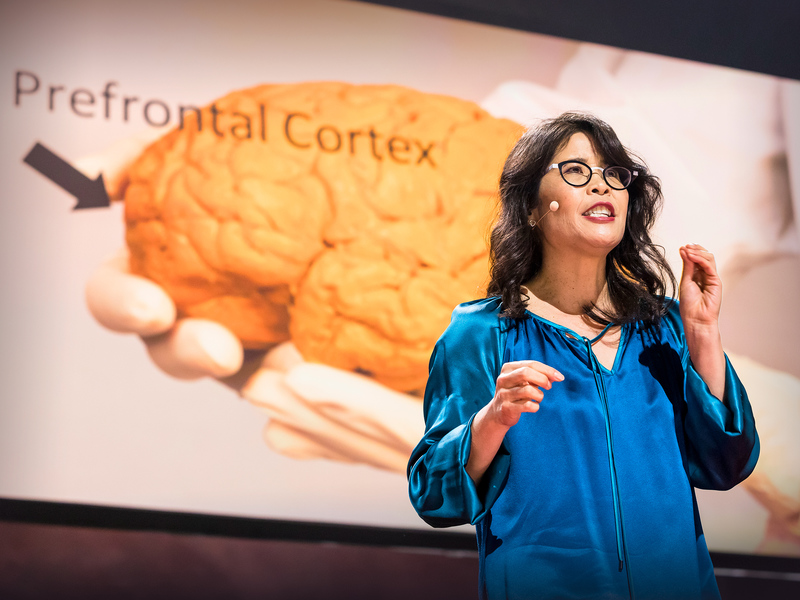
Wendy Suzuki: The brain-changing benefits of exercise

13:02 minutes · Filmed Nov 2017 · Posted Feb 2018 · TEDWomen 2017

What's the most transformative thing you can do for your brain today? Exercise! says neuroscientist Wendy Suzuki. Get inspired to go to the gym as Suzuki discusses the science of working out, and how it boosts your mood and memory -- and protects your brain against neurodegenerative diseases like Alzheimer's.

Playlist of the week

What would it be like to live on another planet?

Mars might be humanity's next destination. But what would it really be like to live there? Watch »

7 TED Talks • Total run time 1:29:14

Catch up on This week's new TED Talks

Technology should work for us, but what happens when it doesn't? Comedian Chuck Nice explores the unintended consequences of technological advancement and human interaction -- with hilarious results. Watch »

Join radio glaciologist Dustin Schroeder on a flight high above Antarctica, and learn how ice-penetrating radar is helping us learn about this vast and shifting landscape -- and what its melting ice will mean for us all. Watch »

Poets Felice Belle and Jennifer Murphy perform excerpts from their play "Other Women," created and directed by Monica L. Williams. In a captivating journey, they weave together stories full of laughter, loyalty, tragedy and heartbreak, recalling the moments that made them feel like true sisters. Watch »

Do human emotions have a role to play in science? Researcher Ilona Stengel suggests that instead of opposing each other, emotions and logic complement and reinforce each other. She shares a case study on how emotions -- like the empowering feeling of being dedicated to something meaningful -- can actually jumpstart a scientific breakthrough. Watch »

Shameem Akhtar posed as a boy during her early childhood in Pakistan so she could enjoy the privileges Pakistani girls are rarely afforded: to play outside and attend school. In an eye-opening, personal talk, Akhtar recounts how the opportunity to get an education altered the course of her life -- and ultimately changed the culture of her village, where today every young girl goes to school. Watch »

How do we find fulfillment in a world that's constantly changing? Raymond Tang struggled with this question until he came across the philosophy of the Tao Te Ching. In it, he found a passage comparing goodness to water, an idea he's now applying to his everyday life. In this charming talk, he shares three lessons he's learned so far from the "philosophy of water." Watch »

Read more on ideas.ted.com

Culture: 10 great films from women directors you can stream right now >>
Looking for a weekend watch? Check this list of funny, scary, amazing movies

Movies: Learn about four under-appreciated jobs in movies >>
Meet the people who win those obscure Oscars

Business: Tracking a money laundering scheme in Panama >>
Global Witness investigators take on the Trump Ocean Club

We humans: Want to multitask better? The key is good feedback >>
The science behind juggling many jobs at once -- brilliantly

Quote of the Week

Physical activity, simply moving your body, has immediate, long-lasting and protective benefits for your brain. And that can last for the rest of your life."

Wendy Suzuki
The brain-changing benefits of exercise

new podcast: WorkLife with Adam Grant

In most workplaces, criticizing your boss is a great way to lose your job. At Bridgewater Associates, you can be fired for NOT criticizing your boss. We grill founder Ray Dalio and his employees to figure out how this kind of radical transparency works in real life -- and how we can all get better at dishing it out (and taking it). Subscribe now on Apple Podcasts.