2016年11月19日 星期六

How play leads to great inventions

Necessity is the mother of invention, right? Not always. Open in your browser
TED
This week on TED.com
November 19, 2016

Steven Johnson: How play leads to great inventions

07:25 minutes · Filmed Oct 2016 · Posted Nov 2016 · TED Studio

Necessity is the mother of invention, right? Well, not always. Steven Johnson shows us how some of the most transformative ideas and technologies, like the computer, didn't emerge out of necessity at all but instead from the strange delight of play. Turns out, you'll find the future wherever people are having the most fun.

Playlist of the week

6 talks that’ll inspire you to learn a new language

Open up a whole new world of possibilities and experiences with these talks that show the benefit (and fun!) of learning a new language. Watch »

6 TED Talks • Total run time 1:08:18

This week's new TED Talks

Unlock the inner workings of the world through one of the most imaginative art forms ever: mathematics. Roger Antonsen explains how a change in perspective can reveal patterns, numbers and formulas -- and create understanding of what was once a mystery. Watch »

In this lucid explainer of a complex technology (that might just change everything), Bettina Warburg describes how the blockchain will eliminate the need for banks and governments to facilitate trade. Age-old models of commerce and finance are about to change. Watch »

Now more than ever, it's important to look boldly at the reality of race and gender bias -- and how they can combine. Kimberlé Crenshaw uses the term "intersectionality" to describe this phenomenon; as she says, if you're standing in the path of multiple forms of exclusion, you're likely to get hit by both. In this deeply moving talk, she calls on us to bear witness -- and speak up for victims of prejudice. Watch »

Let's define our students by what they can contribute, not what they lack, says educator Victor Rios. Sharing his own story of perseverance as an inner-city kid, Rios shares three ways we can shift attitudes about students who face challenges and risks -- so we can focus on their promise, resilience, character and grit. Watch »

Read more on ideas.ted.com

Behavior: Why we love what we make -- even when it's not so great »
Dan Ariely on the surprising joy we feel when we make things

Biology: Should we bring back the woolly mammoth?
Meet two unlikely allies in the quest for de-extinction


Quote of the Week

We want to understand things. Understanding has to do with the ability to change your perspective. If you don't have that, you don't have understanding."

Roger Antonsen
Math is the hidden secret to understanding the world

TED Radio Hour: the food we eat

Food is more than nourishment. It's a source of pleasure and guilt — and an agent of change. This episode, TED speakers explore our deep connection to food. Listen to TED Radio Hour on iTunes »
 

2016年11月12日 星期六

Can a divided America heal? asks a social psychologist

The patterns of thinking that draw us apart ... Open this email in your browser
TED
This week on TED.com
November 12, 2016

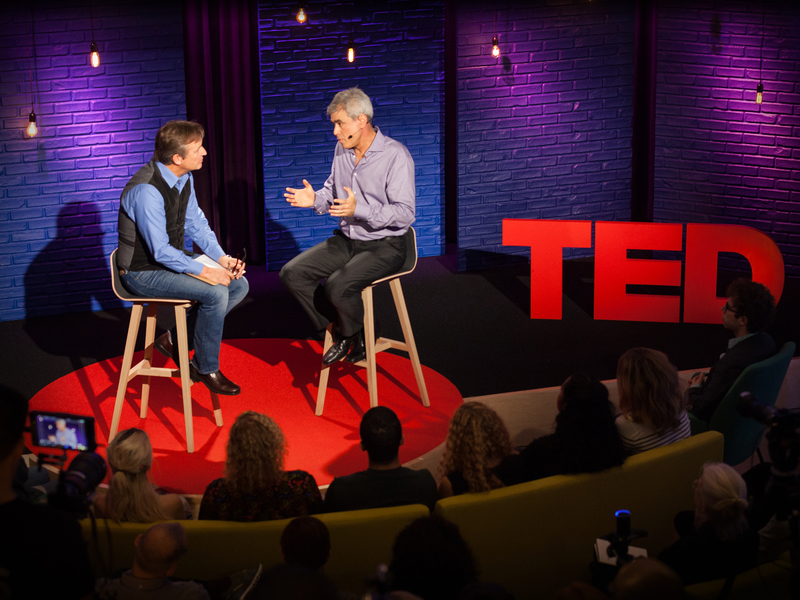
Jonathan Haidt: Can a divided America heal?

20:17 minutes · Filmed Nov 2016 · Posted Nov 2016 · TEDNYC

How can the US recover after the negative, partisan presidential election of 2016? Social psychologist Jonathan Haidt studies the morals that form the basis of our political choices. In conversation with TED curator Chris Anderson, he describes the patterns of thinking that have led to such sharp divisions in America and in countries around the world -- and provides a vision for how to move forward.

Playlist of the week

How to turn the political conversation around

These 8 insightful talks will encourage better debate -- and better listening.  Watch »

8 TED Talks • Total run time 1:29:11

This week's new TED Talks

Engineer Fawn Qiu designs fun, low-cost projects that use familiar materials like paper and fabric to introduce engineering to kids. In this quick, clever talk, she shares scenes from her nontraditional workshops -- where she inspires students not only to understand tech but to create it. Watch »

We train soldiers for war ... but we don't train them to come home. Psychologist Hector Garcia shares a treatment he's using -- which leverages the same principles used to prepare soldiers for war -- to help veterans suffering from PTSD get their lives back. Watch »

On February 10, 2015, Suzanne Barakat's brother Deah, her sister-in-law Yusor and Yusor's sister Razan were murdered in Chapel Hill, North Carolina, by a neighbor who targeted them because they were Muslim. In this powerful and brave talk, Barakat calls on us to understand the shattering price her family has paid for anti-Muslim rhetoric. She asks us to take it seriously -- and to speak up when we witness it. Watch »

With warmth and wit, Halla Tómasdóttir shares how she overcame media bias, changed the tone of the political debate and surprised her entire nation when she ran for president of Iceland -- inspiring the next generation of leaders along the way. "What we see, we can be," she says. "It matters that women run." Watch »

Read more on ideas.ted.com

Art therapy: Powerful masks are helping combat veterans heal »
Creating a mask helps vets explore emotions and experiences

Politics: The real divide in America isn't red vs. blue »
One writer asks: Who is the real "other side"?

Science: How to understand the periodic table »
With a TED-Ed video for every element

Quote of the Week

Jonathan Haidt: As we demonize each other more, we're more likely not just to say about the other side, 'they're wrong' or 'I don't like them,' but we say 'they're evil, they're satanic, they're disgusting.' And then we want nothing to do with them. 
Chris Anderson: So, how do we deal with that? How do we defuse disgust?
Haidt: Personal relationships are the most powerful means we have. You can be disgusted by a group of people, but then you meet a particular person and you genuinely discover that they're lovely. And gradually it chips away."

Jonathan Haidt
Can a divided America heal?
 

2016年11月5日 星期六

How secure is your smartphone? There's one big tell

Is your data really private? Open this email in your browser
TED
This week on TED.com
November 5, 2016

Christopher Soghoian: Your smartphone security is a civil rights issue

07:44 minutes · Filmed Jun 2016 · Posted Oct 2016 · TEDSummit

The smartphone you use reflects more than just personal taste ... it could determine how closely you can be tracked, too. Privacy expert Christopher Soghoian shows the glaring difference between the encryption used on Apple and Android devices -- and urges us to pay attention to a growing digital security divide. "If the only people who can protect themselves from the gaze of the government are the rich," he says, "that's a problem." 

Playlist of the week

Talks that’ll inspire you to unplug

At the beck and call of your technology’s beeps and buzzes? Let these talks inspire you to step back from your screen and engage with the world around you. Watch »

7 TED Talks • Total run time 1:51:20

This week's new TED Talks

Why should a good education be exclusive to rich kids? Schools in low-income neighborhoods across the US go without things that are standard at wealthier schools -- things like musical instruments, new books, healthy school lunches and soccer fields. And this has a real impact on the potential of students. Kandice Sumner sees the disparity every day in her classroom in Boston. In this inspiring talk, she asks us to face the facts -- and change them. Watch »

Your company might have donated money to humanitarian causes, but there might be something even more useful to offer: data. Mallory Soldner shows us the surprising way private companies can help make real progress on big problems -- from the refugee crisis to world hunger -- by donating untapped data sets. What might your company be able to contribute? Watch »

In the face of artificial intelligence and machine learning, we need a new radical humanism, says Tim Leberecht. For the self-described "business romantic," this means designing organizations and workplaces that celebrate authenticity instead of efficiency and questions instead of answers. Leberecht proposes four (admittedly subjective) principles for building beautiful organizations. Watch »

With warmth and wit, Halla Tómasdóttir shares how she overcame media bias, changed the tone of the political debate and surprised her entire nation when she ran for president of Iceland -- inspiring the next generation of leaders along the way. "What we see, we can be," she says. "It matters that women run." Watch »

Read more on ideas.ted.com

Perspective: Three moments from the ancient past that can teach us about the world right now »
Trying to understand the chaos of 2016? Compare it to 343 BC 

Election season: Let these posters inspire you to go out and vote »
Tasty creative work from 14 graphic designers  


spectacular performance

Amanda Palmer and friends gather on the TED stage to pay tribute to the one and only David Bowie, with a moving rendition of "Space Oddity." (Watch for a few surprising famous faces.) Watch »

Quote of the Week

You can only be good when you are truly, authentically listening to your own voice. As a good sister of mine sometimes says, you may cheat on your intuition, but your intuition never cheats on you."

Halla Tómasdóttir
It's time for women to run for office

TED Radio Hour: Democracy On Trial

Democracy is often hailed as the best form of government. But with a growing sense of distrust, should we rethink the whole system? In this hour, TED speakers ask if democracy is truly our best option. Listen on iTunes »


2016年10月30日 星期日

How loss helped one artist find beauty in imperfection

The interaction of life, paint and canvas ... Open this email in your browser
TED
This week on TED.com
October 30, 2016

Alyssa Monks: How loss helped one artist find beauty in imperfection

13:08 minutes · Filmed Nov 2015 · Posted Oct 2016 · TEDxIndianaUniversity

Painter Alyssa Monks finds beauty and inspiration in the unknown, the unpredictable and even the awful. In a poetic, intimate talk, she describes the interaction of life, paint and canvas through her development as an artist, and as a human.

Playlist of the week

The emotional impact of architecture

The angles and shapes of your surroundings can influence how you interact with the people around you. Watch »

8 TED Talks • Total run time 2:00:58

THis WEEK'S TED Talks

Americanization and globalization have basically been the same thing for the last several generations. But the US's view of the world -- and the world's view of the US -- is changing. In a fast-paced tour of the current state of international politics, Ian Bremmer discusses the challenges of a world where no single country or alliance can meet the challenges of global leadership. He asks: Is the US ready to lead by example, not force? Watch »

Sound design is built on deception -- when you watch a movie or TV show, nearly all of the sounds you hear are fake. In this audio-rich talk, Tasos Frantzolas explores the role of sound in storytelling and demonstrates just how easily our brains are fooled by what we hear. Watch »

What if traffic flowed through our streets as smoothly and efficiently as blood flows through our veins? Transportation geek Wanis Kabbaj thinks we can find inspiration in the genius of our biology to design the transit systems of the future. In this forward-thinking talk, preview exciting concepts like modular, detachable buses, flying taxis and networks of suspended magnetic pods that could help make the dream of a dynamic, driverless world into a reality. Watch »

In a society obsessed with body image and marked by a fear of fat, Kelli Jean Drinkwater engages in radical body politics through art. She confronts the public's perception of bigger bodies by bringing them into spaces that were once off limits -- from fashion runways to the Sydney Festival -- and entices all of us to look again and rethink our biases. "Unapologetic fat bodies can blow people's minds," she says. Watch »

Read more on ideas.ted.com

Gallery: Surprising artworks that make you look at the world anew >>
Behind the headlines, this art creates empathy with world events

Language: 5 words that don't mean what they used to mean >>
John McWhorter on 5 shape-shifting words that fascinate him

Creativity: Fear is boring, and other tips for living a creative life >>
Art (and life) advice from Elizabeth Gilbert

Silk Road Ensemble + Rhiannon Giddens: "St. James Infirmary Blues"

08:43 minutes · Filmed Feb 2016 · Posted Oct 2016 · TED2016

The singer Rhiannon Giddens joins up with the international music collective Silk Road Ensemble to perform "St. James Infirmary Blues," spiking the American folk song that Louis Armstrong popularized in the 1920s with Romani influence and mischievous energy.


Daily updates in Group Diigo In Education

1 new Item See More »
Siri Anderson
shared by Siri Anderson 29 Oct 16 06:18:45 - Comment - Like
  • Siri Anderson
    Siri Anderson 29 Oct 16 06:18:45
    I used to promote teaching K-8 computational thinking and coding because of the social justice issues around access to the language of power, economic opportunities, and a belief that learning CT enhances overall academic competencies for those likely to be challenged to succeed in schools.. Now I'm an advocate for a different set of reasons that seem more preeminent. We need everyone to learn computational thinking because ethics and protecting the right to spirituality/secular humanist values seem to be what computers won't be able to do better than humans. Therefore we better have humans who are ethically grounded, informed by the humanities, and competent to understand the implications of the computer software we create. This is a great watch list or podcast list to spur considerations of this urgent matter of the unregulated world of AI.

You received this message because you are a member of the group Diigo In Education at Diigo.com.

Your alert setting indicates that new additions to this group should be sent to you Daily.
Click to change your email alert preference to: Immediately, Weekly , Not subscribed